La Crosse Tree Pros

Tree Removal

La Crosse Tree Pros takes down dead, leaning, and oversized trees for homes and businesses in La Crosse, Onalaska, Holmen, West Salem, and La Crescent. What sits under the tree decides the method: a maple over the garage comes down in sections on ropes, and a cottonwood in an open lot can be felled whole. Ask any tree removal company for that plan in writing. Our tree removal service lists height, drop zone, haul-off, and the stump on a free on-site estimate.

Get a Free Estimate

Get a Free Estimate

Dead, Hazardous, and Large Tree Removal

Every takedown starts with the drop zone. What sits under the tree decides whether it comes down in one piece or in sections.

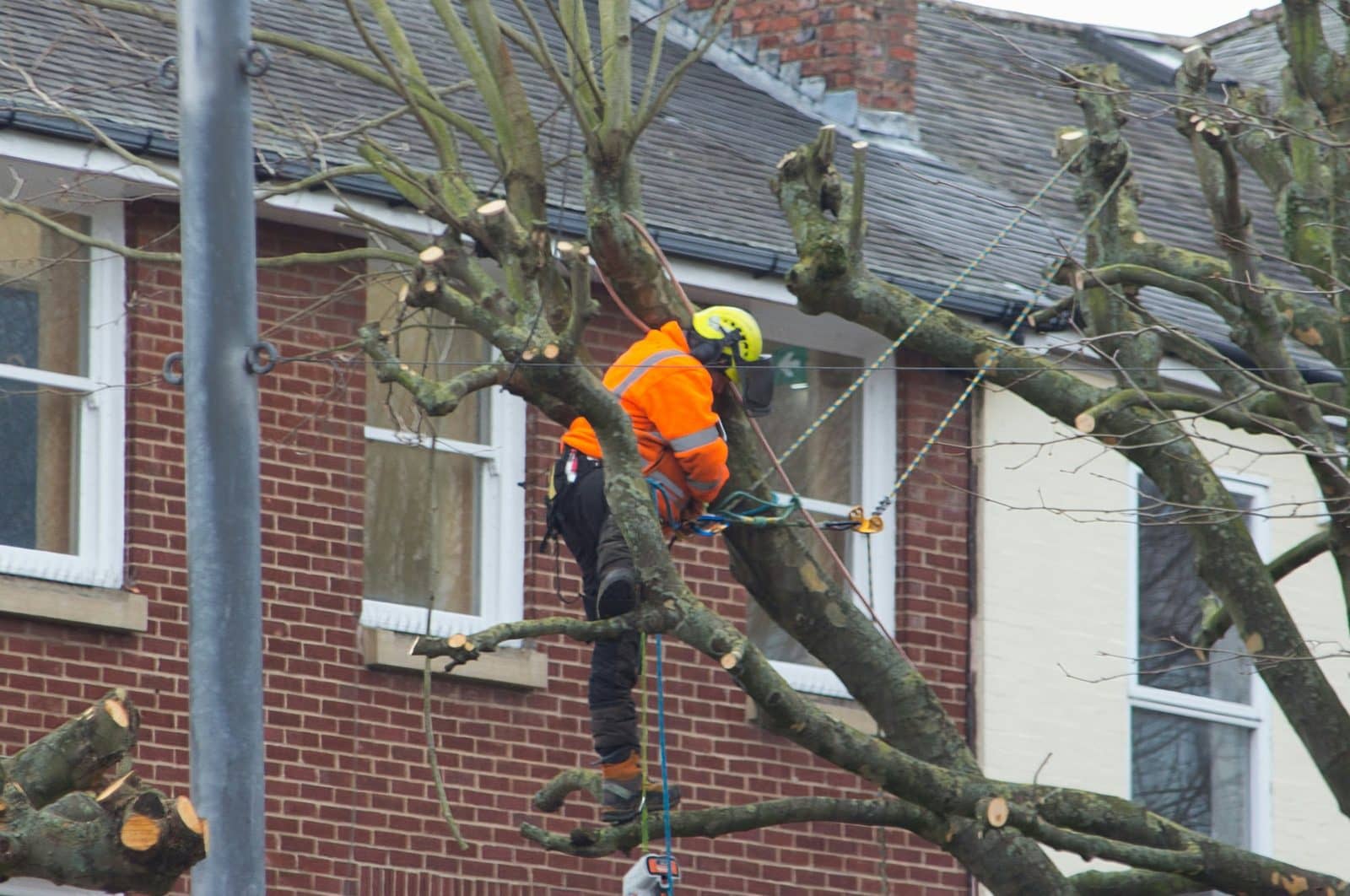
Tree worker cutting limbs from a tree beside a brick house
  • Dead Tree Removal

    A dead tree keeps drying out, and dry wood breaks with less warning than live wood. Small limbs drop first, then whole leaders. We look at the trunk base, the root flare, and any cavities before anyone climbs, because a tree that has stood dead for a few seasons may not be safe to climb at all.

    When climbing is off the table, the plan shifts to rigging from a safer position or bringing in a crane.

  • Hazardous and Leaning Tree Removal

    A lean that shows up after a storm, a cracked union between two leaders, or a hollow at the base all change the cut plan. We check the root plate for heaving soil, look up for hangers, and work out what the tree would hit if it kept moving.

    Some leaning trees can stay. If you want to keep a tree with a weak union, cabling is an option we will discuss, though it will not save every tree. When removal is the call, rigging pulls each piece away from the lean and lowers it to open ground.

  • Crane Tree Removal for Large Trees

    Some trees are too big, too decayed, or too boxed in for climbing and rigging alone. A tall silver maple over a house with no side-yard access is the classic case. We bring in a crane when the site needs it, and pieces lift up and over the roof instead of being lowered past it.

    Crane days need a firm setup spot and a clear path for each lift, and both go on the estimate.

  • Sectional Takedowns Near the House

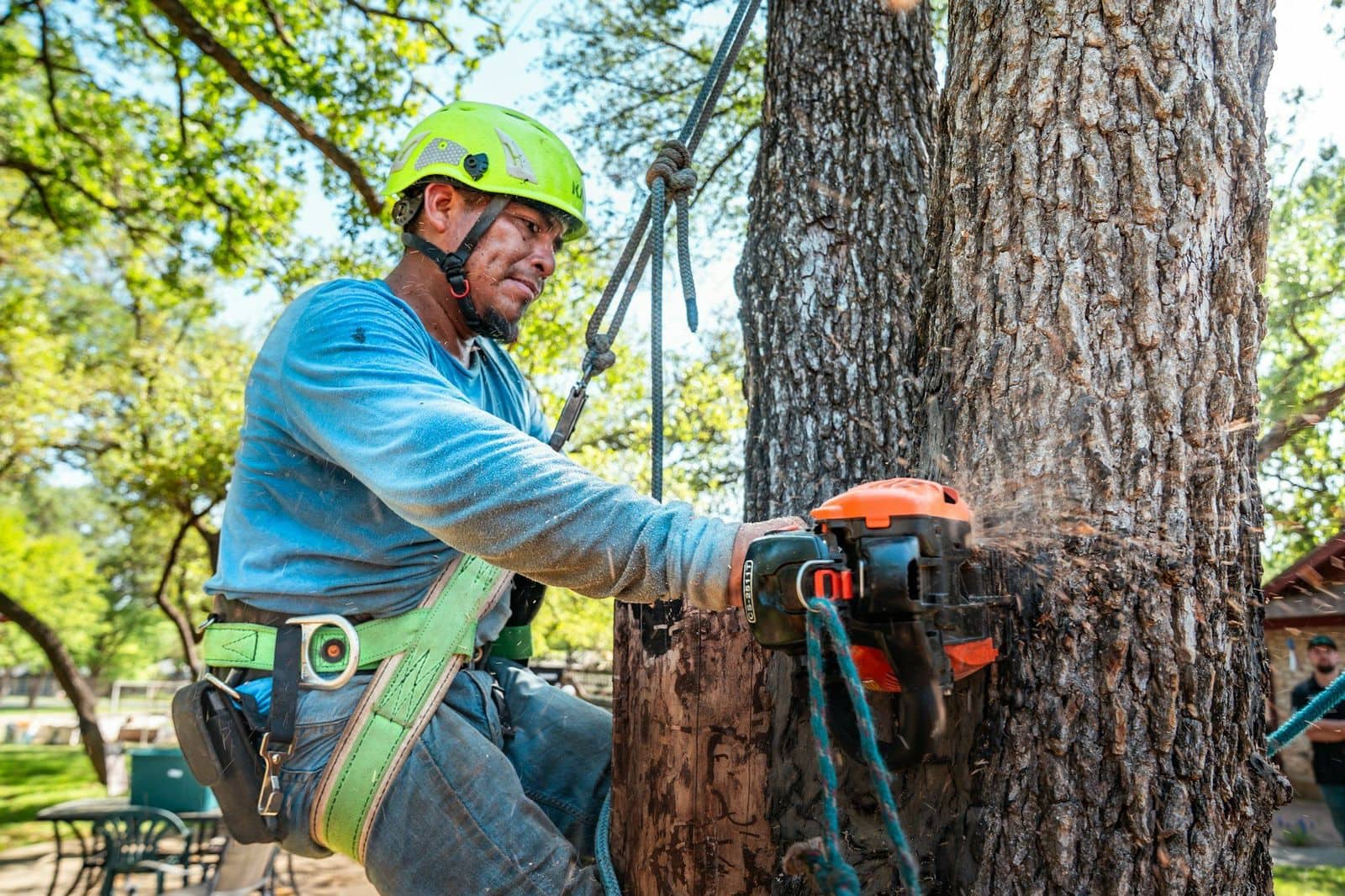
    Next to a roof, deck, or fence, a tree gets taken apart from the top down. A climber ties in, cuts a limb or a length of trunk, and the ground crew lowers it on a rope through a friction device so nothing free-falls onto the house.

    Open felling is for yards with room for the whole tree to land on lawn. The estimate tells you which method your tree gets.

  • Ash Tree Removal and Emerald Ash Borer

    Emerald ash borer has been confirmed in all 72 Wisconsin counties, and the Wisconsin DNR expects it to kill more than 99% of the state's ash. Infested ash dries out and weakens fast, so a dead ash is harder and riskier to take down than a live one. If your ash is thinning from the top, earlier removal is usually simpler removal.

    We remove ash trees. We do not sell or apply insecticide treatments, which in Wisconsin require a DATCP-licensed applicator.

  • Log, Brush, and Debris Haul-Off

    Haul-off is part of the quote unless you tell us to leave the wood. Brush gets chipped, logs get loaded out, and the lawn gets raked before we go.

    Want the logs for firewood? Say so on the estimate and they stay on site.

Our 4-Step Tree Removal Process

  1. 1

    Walk the Drop Zone

    We walk the yard with you and note what sits under the tree: roof lines, fences, gardens, the septic field, and the service line to the house. That walk sets the plan and the written scope.

  2. 2

    Set Rigging or a Fell Line

    Tight yards get ropes, blocks, and a lowering device. Open yards get a notch, a fell line, and a clear escape path. The method is settled before the first cut.

  3. 3

    Section or Fell the Tree

    Limbs come off first, then the trunk in lengths or in one piece. Each piece has a landing spot picked ahead of time, and nobody stands in the drop zone.

  4. 4

    Haul Off and Walk the Yard

    Brush is chipped, logs are loaded or stacked, and the ground gets raked. Then we walk the yard with you and check the stump, the lawn, and anything still hanging.

Tree Removal FAQs

Can you remove the boulevard tree in front of my house?

No. Boulevard and street trees belong to the city, and La Crosse Forestry handles their pruning and removal. Call them at 608-789-8679. We work on the trees on your side of the property line.

When does a tree need a crane instead of climbing and rigging?

When the tree is too decayed to climb safely, too heavy to lower over a roof, or boxed in with nowhere to set pieces down. Dead ash is a common example, since infested wood turns brittle. We make that call on the site walk, write it into the estimate, and bring in a crane only when the site needs it.

What happens if the tree is already leaning toward the house?

Keep people and cars out from under it. If the soil at the base is cracking or the root plate is lifting, treat it as urgent. On site, we rig the tree so each piece swings away from the house and lands on open ground.

Is a dead ash tree harder to take down than a live one?

Yes. The Wisconsin DNR says infested ash starts losing strength as soon as the wood begins to dry, and branch or trunk breakage gets harder to predict. It also notes that some tree services will not let crews climb an ash showing even 20% decline. That is why a dead ash can take more equipment and time than a live tree of the same size.

Can I keep the logs for firewood?

Yes. Tell us on the estimate and the logs stay on site in lengths you can handle. The DNR asks people to burn firewood near where it was cut so pests and disease do not travel. For oak, the DNR suggests covering the stacked wood with 4 mil plastic until the bark loosens.

Ready for a free tree service estimate?

Tell us which tree and what you need done. We will walk the site and send a written scope.

Call NowGet Estimate