La Crosse Tree Pros

Tree Trimming

La Crosse Tree Pros trims and prunes trees for homes and businesses in La Crosse, Onalaska, Holmen, West Salem, and La Crescent. Oaks and elms wait for the dormant window, and maples can be cut in late winter even if they bleed sap. If you are comparing tree trimming services, ask for the cut list in writing. Our tree trimming service names the limbs that come off and why, and the estimate is free at the tree.

Get a Free Estimate

Get a Free Estimate

Tree Pruning for Health, Clearance, and Shape

A good trim takes out what the tree does not need and leaves a crown that can carry the rest. The cut list depends on the species and the calendar.

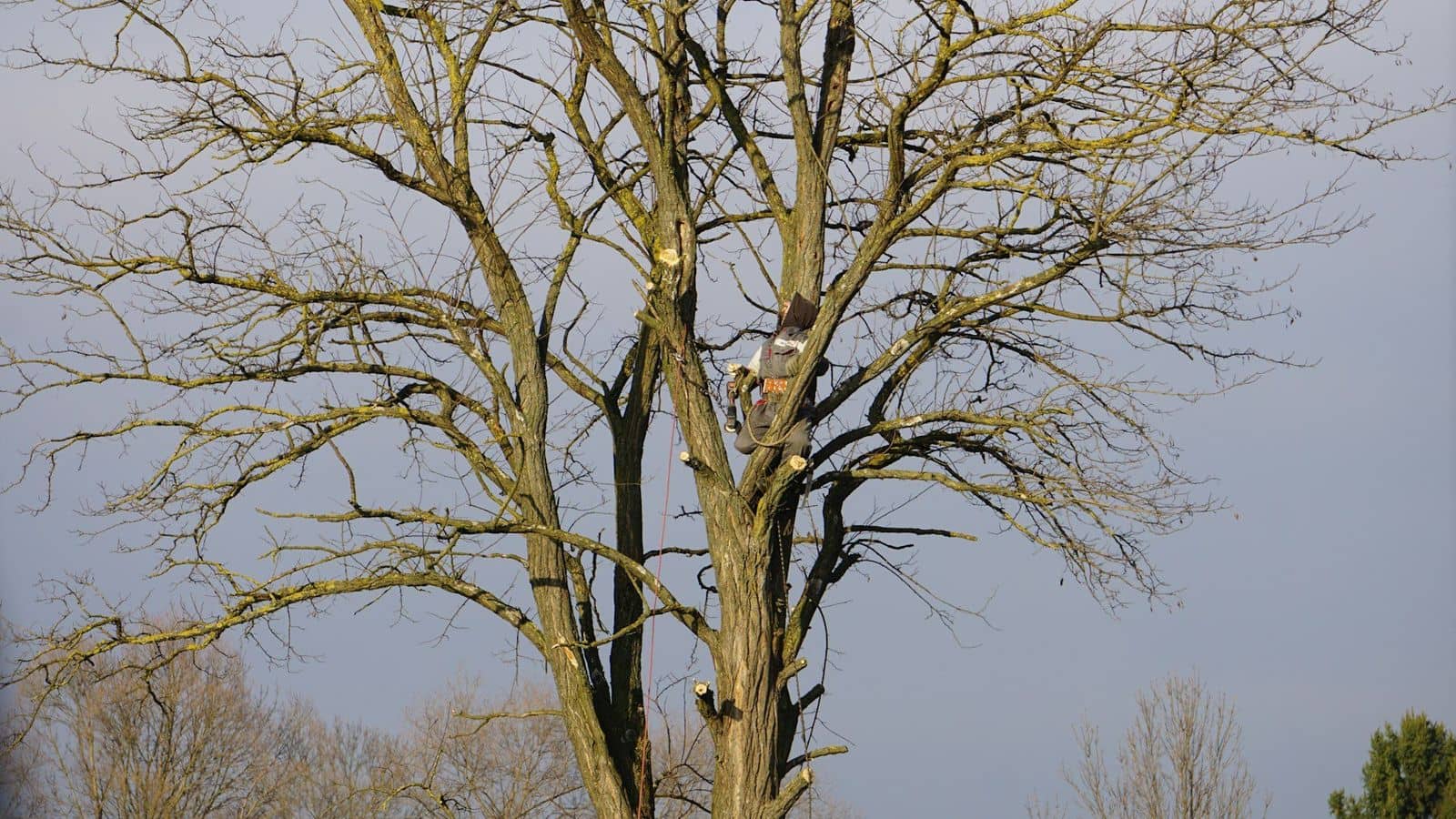
Climber pruning inside the bare crown of a large deciduous tree in winter
  • Deadwood and Limb Removal

    Dead limbs are the first thing on most cut lists. They fall without warning, they let decay into the trunk, and they are the pieces that come through a windshield in a summer storm. We take out dead, broken, and crossing limbs back to live wood or to the trunk.

    Large limbs come off in three cuts, the method UW-Madison Extension describes, so the bark does not tear down the stem when the weight lets go.

  • Crown Thinning

    Thinning takes out selected small branches across the crown so light and wind pass through. The tree keeps its size and shape and carries less weight and sail.

    We thin from the inside of the crown out and leave the branch ends with their natural taper. Stripping the interior and leaving tufts at the tips, called lion-tailing, weakens limbs and invites breakage.

  • Crown Reduction Instead of Topping

    When a tree has outgrown its spot, crown reduction shortens the longest limbs back to a side branch big enough to take over as the new tip. The tree gets smaller and keeps a natural shape.

    Topping cuts straight across the leaders and leaves stubs that sprout weak shoots. UW-Madison Extension calls topping an improper technique that leads to poor branch structure and more limb breakage. We do not top trees.

  • Roof and Walkway Clearance

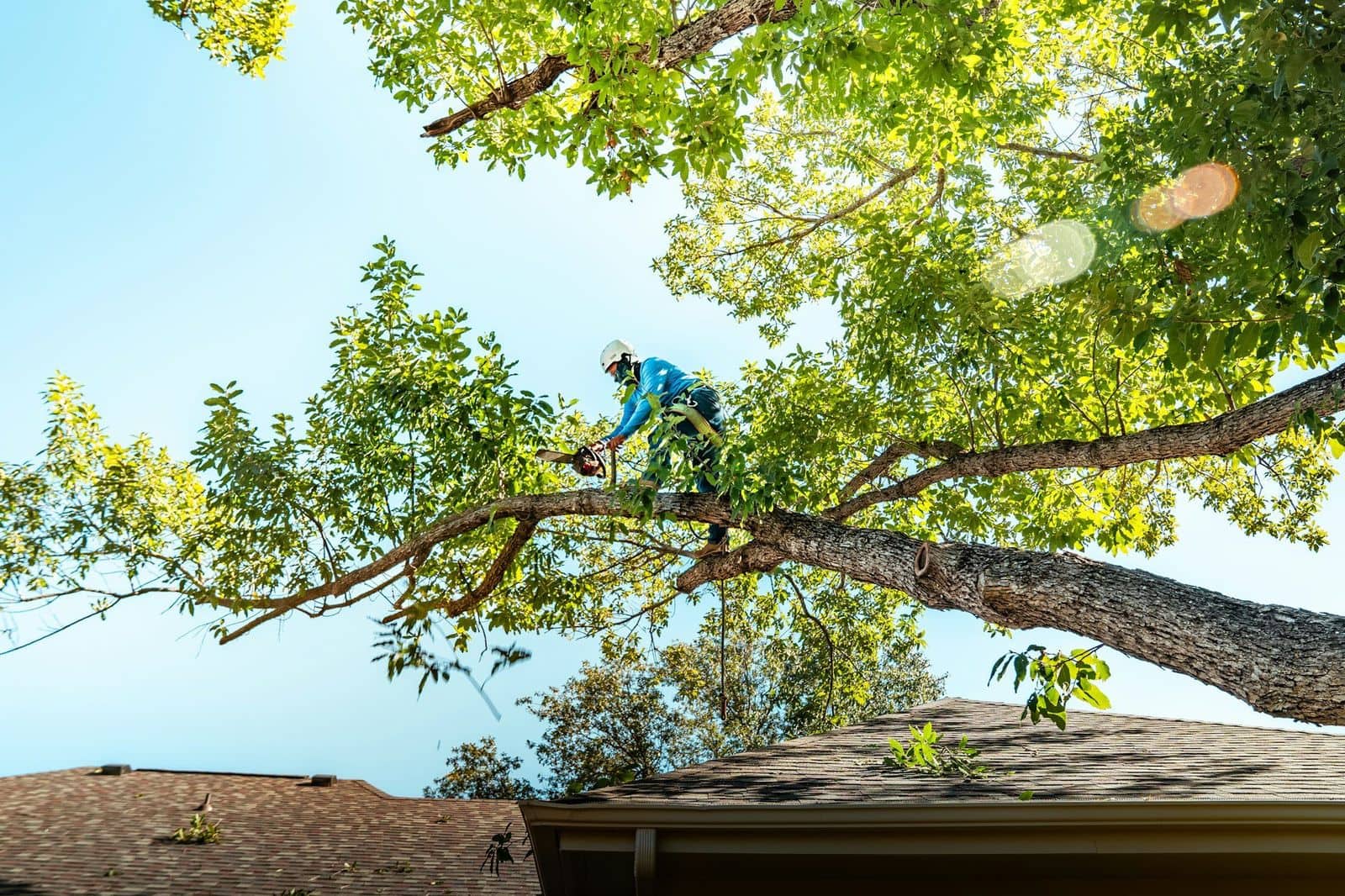
    Limbs that rub shingles, fill gutters, or hang low over a sidewalk or driveway get shortened or removed. Raising the crown takes off the lowest limbs so people, cars, and mowers pass underneath.

    We leave enough live crown to feed the tree and cut back to a branch or the trunk, never to a stub. Branches near the power line to your house are handled differently, as the FAQ below explains.

  • Oak Tree Trimming and the Oak Wilt Window

    The Wisconsin DNR says oak wilt risk is highest from April through July, when sap-feeding beetles carry the fungus to fresh wounds, and it recommends no oak pruning in that window. So oak trimming goes on the schedule for late fall and winter.

    If an oak is storm-damaged or has to be cut in spring or early summer, the DNR advises sealing the wound right away. White, bur, and red oaks all follow the same timing.

  • Pine and Evergreen Trimming

    White pine, red pine, and spruce need a lighter hand than hardwoods. Most conifers do not push new growth from bare wood, so a cut back past the needles stays bare.

    We trim evergreens for dead lower limbs, storm breaks, and clearance, and we leave the leader alone. Heavy snow and ice can split pine tops, and a broken top is a common reason a pine needs work.

Our 4-Step Tree Trimming Process

  1. 1

    Check Species and Season

    Oak, elm, maple, and pine each have their own timing. We identify the tree and set the date around the dormant window or the oak wilt calendar.

  2. 2

    Mark the Cut List

    We walk the tree with you and list what comes off: deadwood, clearance cuts, rubbing branches, and weight over the roof. That list goes on the written estimate.

  3. 3

    Cut at the Branch Collar

    Each final cut lands just outside the branch collar so the wound can close. Large limbs get the three-cut method to keep bark from tearing.

  4. 4

    Chip and Clean Up

    Brush is chipped and hauled, or left as mulch if you want it. The lawn, beds, and driveway get raked and blown off before we leave.

Tree Trimming FAQs

What is the difference between crown thinning and crown reduction?

Thinning removes selected small branches throughout the crown so it is less dense, and the tree stays the same size. Reduction shortens the longest limbs back to side branches, so the whole tree gets smaller. Thinning deals with weight and wind. Reduction deals with a tree that has outgrown its space.

A storm broke an oak limb in June. Can the cut wait until winter?

Not during oak wilt season. The DNR says an oak wounded from April through July should be cleaned up and sealed right away, because beetles carrying the fungus are drawn to fresh wounds. Call once the broken limb is safe to reach, and the clean cut gets sealed at the time it is made.

Why is my maple dripping sap after a late-winter trim?

Maple, birch, walnut, elm, and a few others bleed sap when they are pruned in late winter, as the sap starts moving. UW-Madison Extension says the bleeding may be unsightly but does not harm the tree.

Will you trim branches near the power line to my house?

Not near energized lines. Xcel Energy manages trees near its power lines, and for the service line to a house it can schedule a disconnect so a contractor can trim safely. Call Xcel Energy customer service at 1-800-895-4999 to set that up. We can trim the rest of the tree before or after.

How much of a tree can come off in one trim?

UW-Madison Extension's pruning guide says to remove no more than one third of the total crown at one time, and that ceiling is written for young trees being trained. Established trees that were shaped well when young need little pruning, so a trim on a mature shade tree takes far less than that.

Ready for a free tree service estimate?

Tell us which tree and what you need done. We will walk the site and send a written scope.

Call NowGet Estimate